 EN



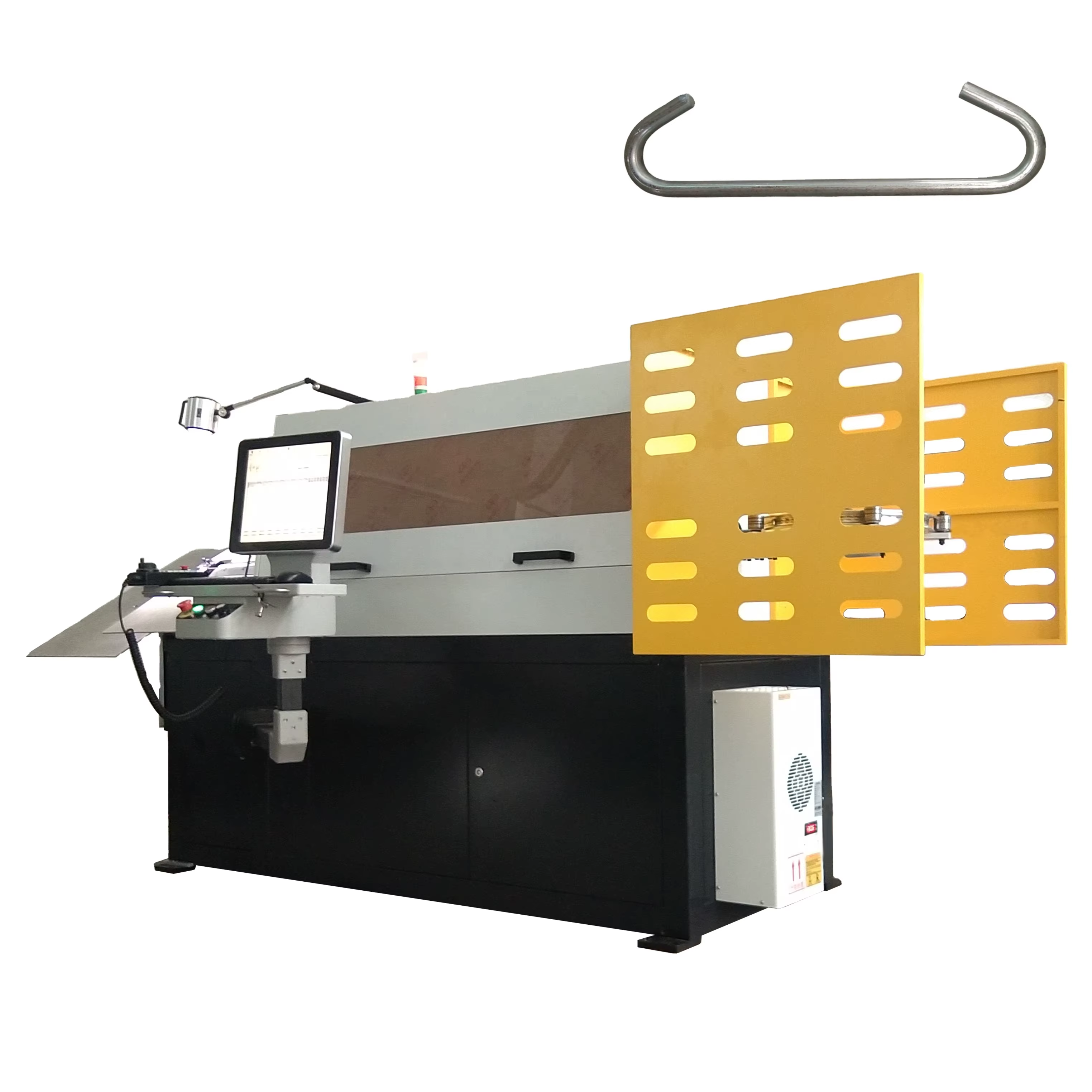
Can Modern Automatic Wire Bending Machines Actually Handle Complex Three-Dimensional Shapes?
When product designers, industrial manufacturing plant managers, and hands-on automation engineers sit down to design intricate multi-directional metal components, they frequently run into a frustrating roadblock. Traditional shop equipment and old-school manual bending jigs simply fall short when geometry gets complicated. One of the most common technical questions popping up in custom fabrication workshops worldwide is whether an automatic wire bending machine can genuinely tackle complex three-dimensional wire forms without sacrificing structural strength, precise repeatability, or production speed. Drawing from years of shop floor programming, mechanical adjustments, and CNC tooling evaluations, let us dive into the advanced technology, practical operating tricks, and real business benefits that make automated 3D wire forming an absolute game-changer for modern manufacturing floors.
Understanding Multi-Axis CNC Architecture and Spatial Precision
If you look at the pure engineering behind it, a machine's ability to shape complicated spatial geometry comes down to sophisticated multi-axis CNC architecture. Unlike older generations of equipment that were locked into basic two-dimensional flat planes, a modern automatic wire bending machine uses synchronized, high-torque servo motors. These motors work together in real-time to control how fast the wire feeds, how the bending head rotates, and where the internal mandrel positions itself. Industry engineering guidelines point out that true spatial 3D forming requires at least three to five synchronously controlled axes working in perfect harmony. This kind of advanced mechanical coordination lets the machine steer continuous wire stock smoothly through multiple directions simultaneously, cutting out tedious manual secondary welding or multi-stage hand operations while keeping tight angular tolerances across every single production run.
Tackling Material Springback and Internal Stress in Spatial Bending
Bending wire across multiple planes introduces some genuinely tricky mechanical hurdles, with cumulative material springback sitting right at the top of the list. Whenever you take a metallic wire—whether it is cold-rolled carbon steel, tough stainless steel, or spring brass—and put it through a series of quick, multi-directional bends, residual internal stress builds up fast inside the metal's crystal structure. Without smart software intervention and automated adjustments, those locked-in forces will cause the final 3D shape to warp, twist, or drift completely out of tolerance. Skilled operators rely on advanced programmable logic controllers packed with real-time feedback loops and automated springback algorithms. This technology calculates the exact compensation angle on the fly, ensuring that complex parts—from automotive seat frames to custom wire grilles—match digital CAD files with absolute accuracy and zero guesswork.
Real-World Lessons Learned on the Shop Floor
To see how all this advanced tech actually plays out in a live workshop environment, consider a recent challenge we tackled right on our own production floor. A major interior automotive supplier came to us needing a batch of highly complex 3D wire armatures featuring tricky compound curves and tight internal radii that old manual jigs just could not replicate consistently. By moving the entire production run over to a multi-axis automatic wire bending machine equipped with rotating head tech and dynamic wire rotation, our team wiped out fixture changeover downtime completely. The automated programming sequence dropped defect scrap rates down to a tiny fraction of what they used to be, while cutting total cycle time per unit by more than half. It proved once and for all that high-end automation brings unbeatable consistency to complicated jobs.
Striking the Right Balance Between Geometric Complexity and Scalability
Looking past the cool engineering features, the real business justification for investing in automated 3D wire forming comes down to production scalability and labor efficiency. In the past, building complex wire parts meant dealing with a messy, fragmented workflow: cutting raw wire to length, dragging stock over to manual bending jigs, hauling parts to secondary spot-welding stations, and running tedious manual quality checks. Today's automatic wire bending machines pack all those separate, heavy-labor steps into a single, continuous, lights-out manufacturing sequence that runs smoothly straight from coil stock to finished part. Cutting out all that extra handling drastically lowers labor overhead, slashes human error, and gets products to market way faster. Supply chain specialists always emphasize that streamlined, single-source wire fabrication is essential for protecting profit margins in competitive global markets.
Achieving Long-Term Manufacturing Excellence with Xinsheng
Unlocking the true potential of intricate 3D wire forming takes a lot more than just fancy software—it requires rock-solid machine build quality, durable tooling, and a manufacturing partner who genuinely understands industrial challenges inside and out. Xinsheng has built a trusted global reputation for supplying state-of-the-art automatic wire bending machines engineered for extreme precision, operational flexibility, and rugged around-the-clock reliability. Whether you are scaling up complex automotive component production, developing custom architectural hardware, or searching for tailored machinery solutions for specialized wire projects, Xinsheng combines cutting-edge engineering with robust supply chain backing. Partnering with Xinsheng helps you elevate production output, master difficult geometries, and future-proof your business operations for long-term success.
Table of Contents
- Can Modern Automatic Wire Bending Machines Actually Handle Complex Three-Dimensional Shapes?
- Understanding Multi-Axis CNC Architecture and Spatial Precision
- Tackling Material Springback and Internal Stress in Spatial Bending
- Real-World Lessons Learned on the Shop Floor
- Striking the Right Balance Between Geometric Complexity and Scalability
- Achieving Long-Term Manufacturing Excellence with Xinsheng