 EN



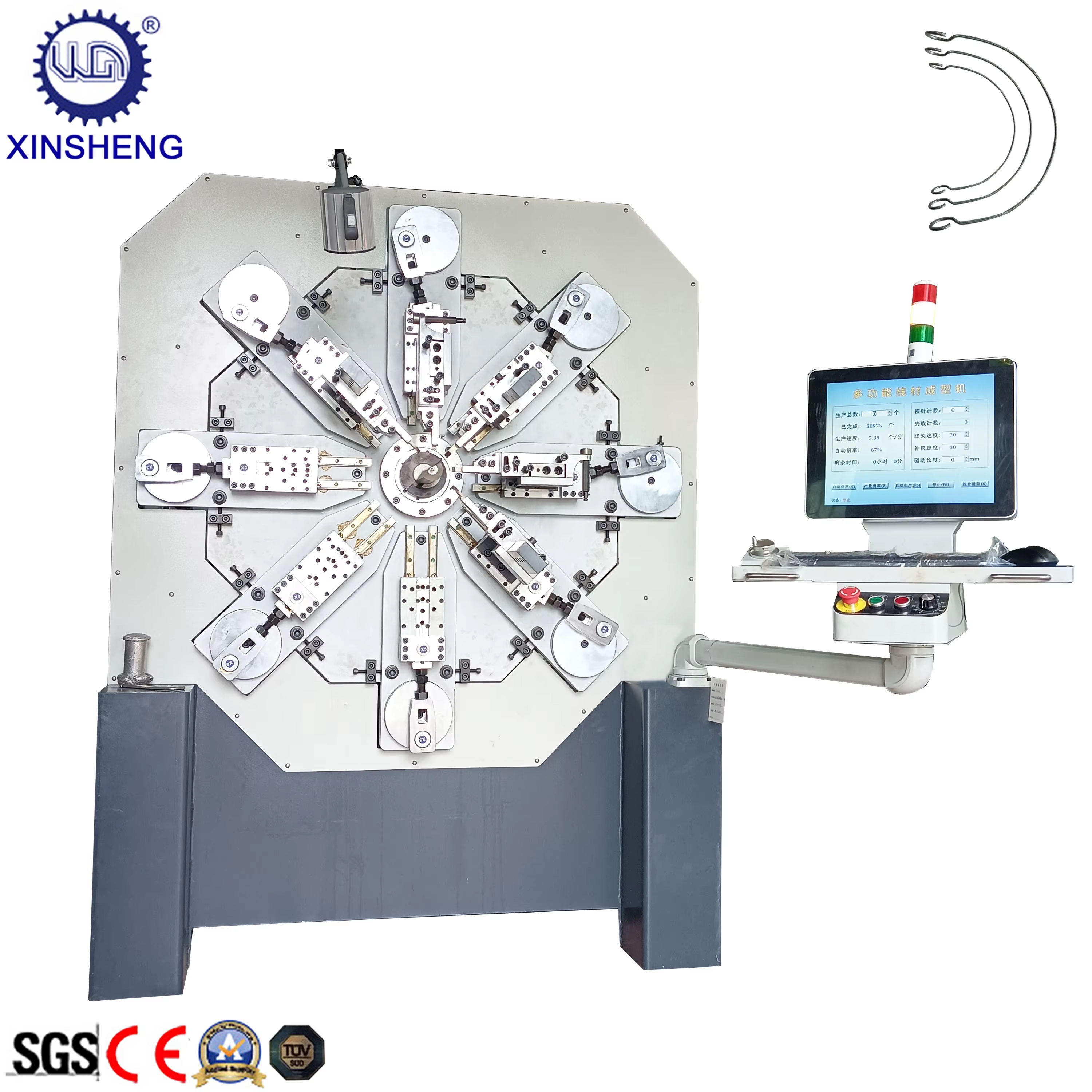
When scaling up industrial operations for high-volume metal component manufacturing, automotive fasteners, or architectural hardware production, choosing the right bending machine is a critical decision that directly dictates factory profitability, product consistency, and long-term operational uptime. In mass production environments, even minor equipment drift or mechanical instability can result in thousands of out-of-tolerance parts, translating into costly material waste and severe supply chain delays. Drawing from extensive plant engineering audits, mechanical consultancy, and heavy machinery performance evaluations, identifying what constitutes a truly stable and high-performance bending machine requires a deep understanding of core drive technologies, control systems, and structural rigidity. For manufacturing executives, plant directors, and procurement heads aiming to future-proof their production lines, mastering these technical evaluation criteria safeguards capital investments while ensuring exceptional repeatability across millions of fabrication cycles. Furthermore, selecting industry-leading manufacturing equipment establishes a solid foundation for operational excellence, high throughput capacity, and enhanced corporate prestige in competitive global markets. Modern industrial standards demand meticulous attention to mechanical engineering specifications and servo control precision to achieve optimal output metrics across all high-volume commercial applications, ensuring that active manufacturing facilities maintain complete operational reliability and regulatory compliance throughout every phase of production.
Structural Rigidity and Frame Engineering Under High-Speed Loads
The foundation of any stable mass-production bending machine lies in its structural frame integrity and heavy-duty mechanical engineering. During high-speed, continuous fabrication runs, standard machinery frames are subjected to immense cyclical stresses, continuous vibration, and thermal fluctuations that can gradually cause structural micro-deformation, leading to gradual dimensional drift in finished parts. Premium industrial bending machines utilize stress-relieved, heavy-gauge steel welded frames designed to absorb shock loads and suppress vibration entirely. According to mechanical engineering research and industrial machine tool standards, a rigid, heavy-mass frame ensures that the tooling alignment remains precise even during continuous multi-axis operation. When evaluating machinery for mass manufacturing, plant managers must prioritize units constructed with robust architectural rigidity, as this structural stability eliminates unpredictable spring-back variations and guarantees uniform output from the first component of motion to the very last. Additionally, reinforced base structures prevent foundation flexure during heavy fabrication cycles.
Advanced Servo-Driven Control Systems and Motion Accuracy
Beyond physical framework stability, the electronic brain and motion control architecture dictate the ultimate precision and repeatability of a high-volume bending machine. Traditional mechanical systems often suffer from wear-induced backlash and mechanical slippage, whereas modern computer-controlled machines integrate advanced multi-axis servo motors and high-resolution optical encoders. These sophisticated feedback loops allow the machine to calculate and correct position adjustments instantaneously during every single bending cycle. Industrial automation studies and motion control evaluations consistently demonstrate that servo-driven systems achieve exceptional angular accuracy and tight dimensional tolerances, which are absolute prerequisites for automated mass hardware production. By eliminating human error and manual calibration overhead, programmable servo systems empower operators to switch between complex product designs seamlessly while maintaining absolute uniformity across massive batch runs. Moreover, closed-loop feedback mechanisms guarantee precise repeatability across complex geometries.
Integrated Multi-Process Automation and Secondary Tooling
Mass hardware manufacturing rarely involves simple, isolated bending tasks; instead, modern production lines require seamless integration with secondary operations such as end-forming, punching, threading, welding, or chamfering to achieve fully automated single-pass fabrication. Selecting a bending machine that features modular multi-axis capabilities and flexible tooling interfaces transforms a standard workshop into an efficient, streamlined production ecosystem. Manufacturing efficiency experts emphasize that consolidating multiple fabrication steps into one continuous workflow eliminates manual material handling between disparate stations, drastically reducing labor costs and cycle times. Advanced multi-axis CNC bending systems allow manufacturers to configure secondary processing units directly onto the primary line, enabling raw metal wire or strip stock to enter the machine and emerge as a finished, fully assembled component ready for commercial packaging and global distribution. Furthermore, automated feeding mechanisms streamline continuous material input.
Thermal Stability and Continuous Operational Endurance
High-volume industrial manufacturing subjects machinery to grueling operational schedules, often operating across multiple shifts with minimal downtime. Under such intense conditions, internal components, hydraulic circuits, and electrical drives generate significant heat, which can compromise fluid viscosity, electrical resistance, and mechanical tolerances if thermal management is inadequate. A truly reliable mass-production bending machine must feature advanced thermal management systems, high-grade cooling fans, and precision-calibrated temperature compensation algorithms built into the controller. Technical field audits confirm that industrial machines equipped with superior thermal stability maintain consistent operational speeds and precise bending angles over extended operational hours without requiring frequent calibration stops. This continuous endurance is essential for plants committed to fulfilling strict delivery schedules and meeting high-volume customer demands without unexpected technical interruptions. Ultimately, robust thermal regulation preserves mechanical tolerances over prolonged production shifts.
Securing Production Excellence Through Trusted Manufacturing Partnerships
Evaluating and investing in heavy-duty industrial machinery ultimately culminates in selecting a manufacturing partner with proven technical expertise, robust global supply chain support, and a reputation for uncompromising quality. Purchasing unverified or generic equipment often leads to inadequate technical support, frequent spare parts shortages, and debilitating factory downtime. Partnering with established industry leaders like Xinsheng transforms your component manufacturing strategy entirely. Backed by advanced large-scale production facilities, rigorous international quality control standards, and a comprehensive global service network, Xinsheng specializes in delivering precision-engineered, heavy-duty CNC bending machines designed to excel in the most punishing industrial environments. Whether your facility requires custom multi-axis tooling, specialized wire-forming configurations, or complete turnkey automation solutions, collaborating directly with Xinsheng guarantees superior machinery durability, seamless technical support, and enduring commercial value for your enterprise worldwide. Through reliable supply chain partnerships and rigorous technical execution, businesses secure a definitive competitive edge in global markets.
Table of Contents
- Structural Rigidity and Frame Engineering Under High-Speed Loads
- Advanced Servo-Driven Control Systems and Motion Accuracy
- Integrated Multi-Process Automation and Secondary Tooling
- Thermal Stability and Continuous Operational Endurance
- Securing Production Excellence Through Trusted Manufacturing Partnerships