 EN
EN



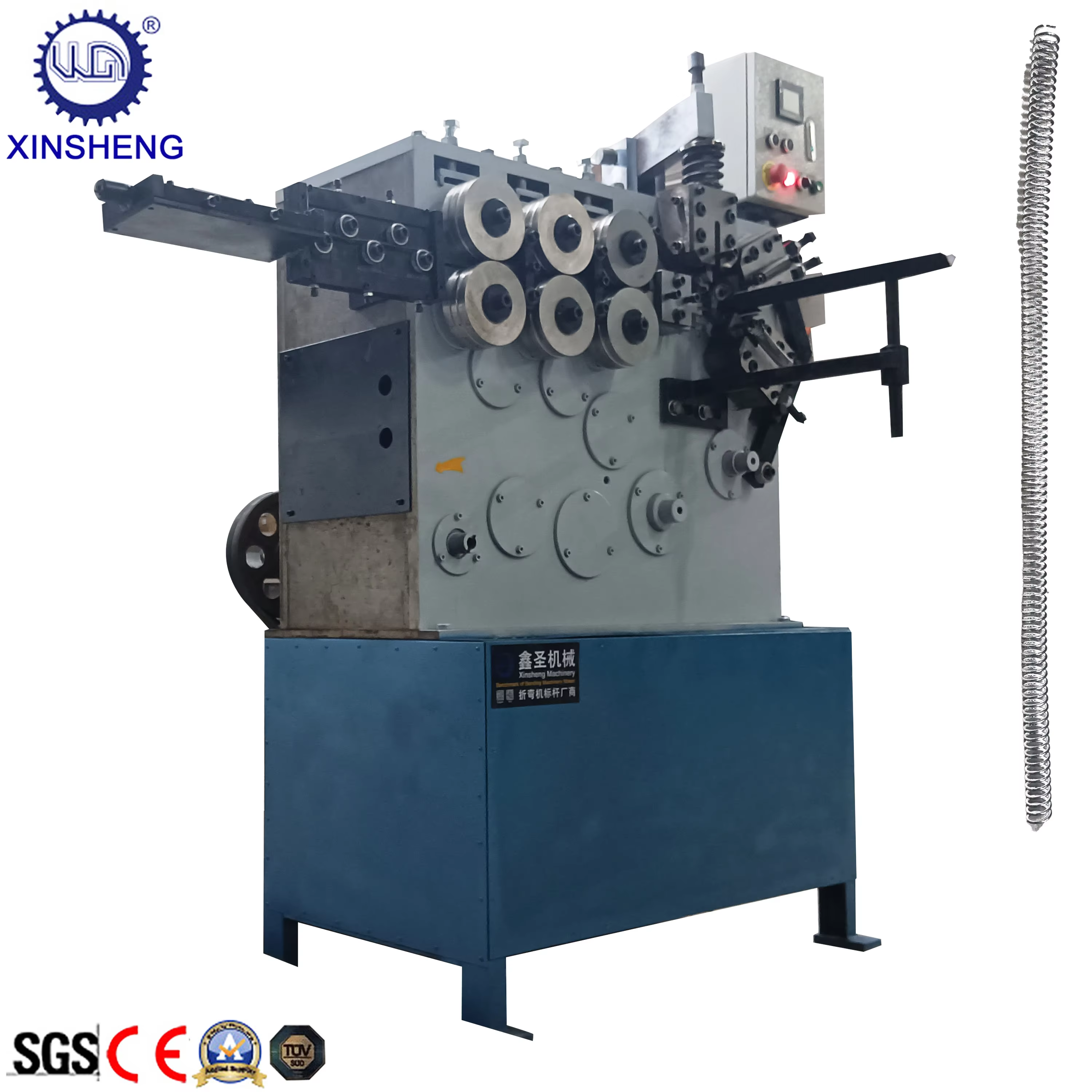
Understanding Spring Machine Tooling for Compression, Extension, and Torsion Springs
The Role of Spring Machine Tooling in Precision Coiling Across Spring Types
The quality of spring machine tooling really matters when it comes to getting accurate geometry and reliable function across all types of springs including compression, extension, and torsion varieties. When making compression springs, good tooling makes sure the coils are evenly spaced and maintain consistent pitch throughout the manufacturing process which affects how much force they can resist before failing. For extension springs, manufacturers need to get those hook shapes just right and ensure tension spreads evenly along the length. Torsion springs require special equipment too since their arms must rotate at specific angles repeatedly with precise amounts of torque applied each time. According to industry reports, better tooling cuts down on failures by around 40 percent because it keeps coiling errors below 0.01 millimeters even when machines run fast. This kind of precision isn't optional in applications where people's lives depend on it. Think about car suspensions that rely on compression springs, garage doors balanced by extension springs, or factory equipment using torsion springs for clamping operations. Even tiny measurement mistakes here can lead to breakdowns, shortened lifespan, or worse yet, endanger users who trust these mechanical components to work flawlessly day after day.
Core Components: CNC-Controlled Mandrels, Guide Tools, and Multi-Axis Tooling Heads
Modern CNC spring machines integrate three interdependent tooling systems:
- Mandrels: Precision-machined, diameter-adjustable shafts that define coil geometry; CNC-controlled mandrels enable real-time taper compensation during coiling
- Guide Tools: Laser-aligned assemblies that regulate wire feed angle and lateral stability, minimizing deflection and surface scoring—especially critical with high-strength or corrosion-resistant alloys
- Multi-Axis Tooling Heads: Programmable units capable of synchronized operations—such as end-loop forming, arm bending, or cutoff—while coiling continues
All these parts work together like one big machine. Take for example what happens during production when moving from stainless steel to titanium wire. The multi-axis head actually changes the guide pressure and adjusts how fast the mandrel spins right in the middle of each cycle. This helps compensate for how different materials behave when they bounce back or deform under stress. Modern CNC systems can now make springs at less than two seconds per piece while keeping force levels pretty much the same, give or take about 3%. So here's something interesting: fast production doesn't have to mean poor quality anymore. What we see is that really good results come from tools that just fit together better, almost like puzzle pieces made specifically for this kind of work.
Customization Parameters in Spring Machine Tooling: Aligning Design with Performance
Key Variables: Spring Rate, Wire Diameter, Material, Free Length, and End Types
Five interrelated design parameters drive tooling customization decisions:
- Spring rate, expressed in force per unit deflection (e.g., N/mm), dictates load capacity and requires fine-tuned coiling tension and mandrel dwell timing
- Wire diameter directly influences stiffness and fatigue life—and determines required torque capacity, mandrel surface hardness, and guide tool clearance
- Material selection (e.g., ASTM A228 music wire vs. AISI 302 stainless steel) affects thermal expansion, springback behavior, and surface sensitivity—necessitating material-specific guide geometries and lubrication protocols
- Free length governs mandrel positioning accuracy and axial feed synchronization, especially for long, low-rate compression springs
- End types (closed & ground, double-hooked, offset arms, etc.) demand dedicated cutoff tools, bending attachments, and secondary forming stations—particularly for torsion springs requiring angular arm repeatability within ±0.5°
Together, these variables inform the configuration of every tooling component—not as isolated settings, but as a coordinated system calibrated to deliver functional performance without sacrificing throughput.
Balancing Precision and Cost in Custom Spring Machine Setups
Getting down to micron level accuracy when making springs requires some tough choices rather than simple trade-offs. When manufacturers invest in those fancy CNC machines with their smart feedback systems, they can slash material waste by around 18 percent. But let's face it, these machines come with a hefty price tag upfront. The key to managing costs lies in modular design principles. Standardized mandrels and guide tools that swap out quickly mean shops can switch between different spring types much faster, which cuts downtime and keeps inventory simpler. Take those tricky tapered compression springs for instance. Shops that spend on multi-stage tooling heads see setup times drop by about 30% compared to old school manual methods, plus they get better control over the whole process. What works best? A layered strategy makes sense here. Use super precise hardened tools for the really important measurements like hook radius or arm angles, but save money elsewhere with adjustable fixtures for things like general free length specs. This approach maintains what matters most functionally while still allowing shops to handle diverse orders efficiently without turning every part of the operation into an engineering nightmare.
Advanced Tooling Strategies for Complex Spring Geometries
Precision Challenges in Torsion Spring End-Loop Formation and Arm Bending
The performance of torsion springs really depends on getting those end loops just right and maintaining proper arm angles. These features are super sensitive to things like material springback and mechanical drift during manufacturing. To hit that tight ±0.5 degree tolerance for arm angles, manufacturers need smart tooling systems that actually predict how materials will react. These systems compensate ahead of time based on factors like what kind of metal they're working with, wire thickness, and how tightly it needs to be bent. Modern multi-axis tooling heads have changed the game completely. Instead of doing several separate steps, these machines shape loops, bend arms, and cut off excess material all in one smooth operation. This approach keeps everything aligned properly and stops distortion from happening when parts get handled multiple times. When companies skip this integrated approach, small alignment issues build up over multiple setups. The result? Torque variations can jump over 30% which makes these springs unreliable for critical applications such as the tiny actuators inside surgical tools or the locking mechanisms used in aircraft doors where consistency matters most.
Adapting Tooling for Tapered, Conical, and Hourglass Spring Profiles
Regular tooling with fixed diameters just doesn't work when dealing with springs that have changing geometry. That's where progressive mandrel systems come in handy these days. The mandrel diameter changes gradually as the wire feeds through, allowing for seamless movement between different coil sizes in those tapered or cone-shaped designs. When working on hourglass profiles specifically, manufacturers often use two guide tools facing each other to keep the wire stable sideways. At the same time, modern CNC controllers adjust things like pitch rates, how fast the machine rotates, and where exactly the mandrel sits during production. This helps avoid problems with buckling in those tight compression areas. Getting this right matters a lot because it spreads out the stress evenly across all those complicated shapes. Think about things like vibration dampers or tiny medical springs where stress builds up in one spot can really shorten their lifespan.
Emerging Trend: Adaptive CNC Spring Coilers for Non-Uniform Coil Shapes
New adaptive CNC coilers now come equipped with real-time laser measurements built right into the coiling operation itself. When the wire starts winding around, special sensors inside actually track things like how big each coil gets, how tight the spacing is between coils, and whether everything stays square as it should be. All this info goes straight back to the machine's brain, letting it tweak the tools while still running. What does this mean? Well, manufacturers can now produce springs in one go even if they need different sizes along the same piece, have those oval-shaped parts, or require specially formed ends at either end. No need to stop the whole process just to check dimensions manually anymore. These machines handle variations from one batch of materials to another too. Sometimes metal isn't exactly the same thickness or strength from one shipment to the next, but these systems adjust automatically for such issues. The result? Scrap piles shrink by about 40 percent when compared against older methods of coiling. For industries where getting everything right matters most, like making medical devices or parts for airplanes, this technology changes everything. Suddenly something that used to take lots of hands-on work becomes something that scales up easily without breaking the bank. And let's face it, nobody wants defects slipping through quality control in these fields anyway.
FAQ
What is spring machine tooling?
Spring machine tooling refers to the specialized equipment used to manufacture springs of varying types, including compression, extension, and torsion springs. This tooling ensures precise geometry and reliable function.
How does CNC technology benefit spring manufacturing?
CNC technology provides automated, precise control over different tooling components, reducing errors and increasing production speed without sacrificing quality.
Why is precision important in spring tooling?
Precision is crucial because even small errors in spring manufacturing can lead to significant performance issues or failures, especially in critical applications such as automotive suspensions and medical devices.
What are common customization strategies in spring tooling?
Customization strategies include adjusting spring rate, wire diameter, material selection, free length, and end types to achieve desired performance and efficiency.
What are adaptive CNC spring coilers?
Adaptive CNC spring coilers are advanced manufacturing machines equipped with real-time sensors that adjust tooling and coil formation during production, allowing for the creation of non-uniform coil shapes efficiently.