 EN
EN



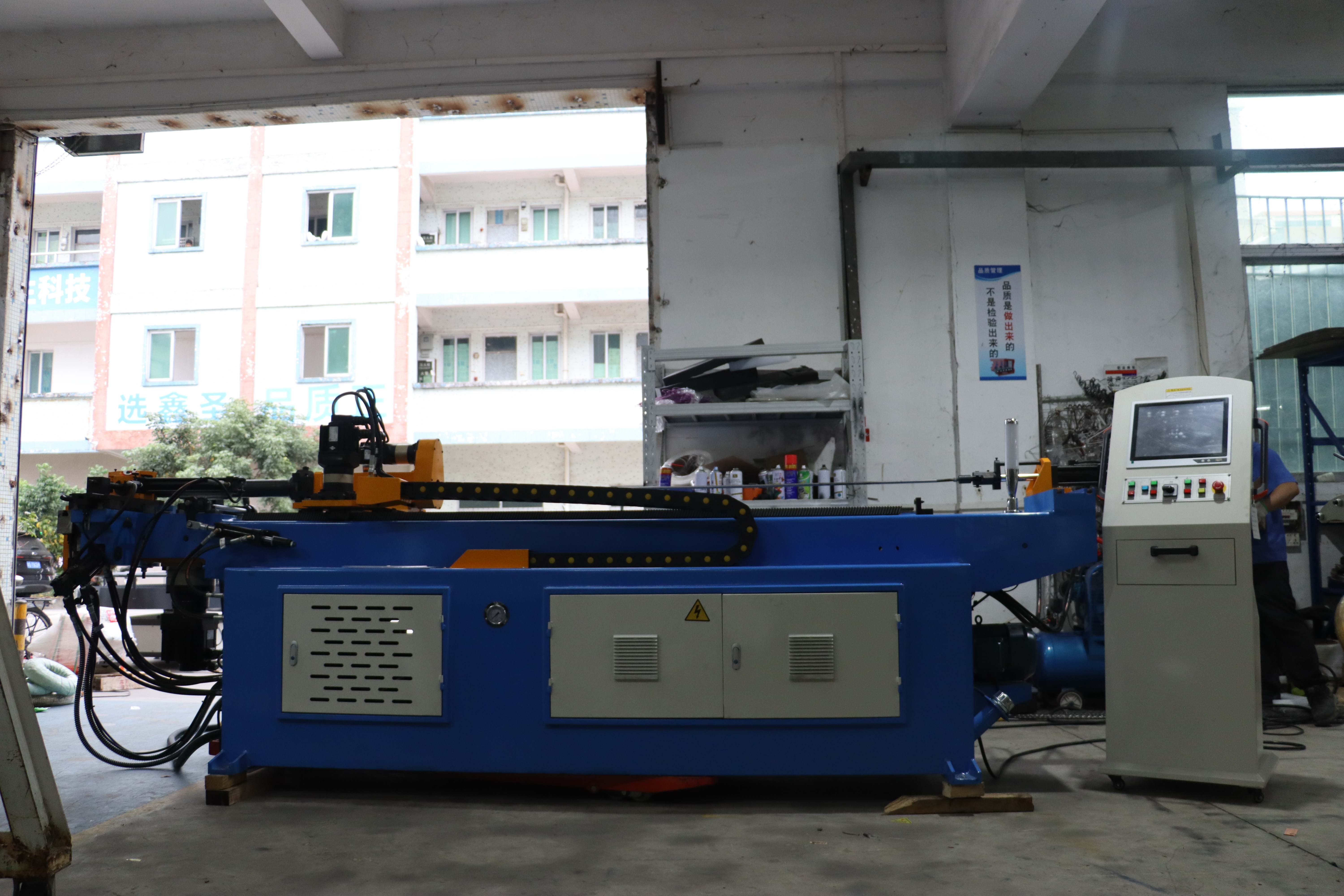
Match Tube Bending Machine Capacity to Your Tubing Specifications
Diameter, Wall Thickness, and Material: Core Determinants of Required Machine Capacity
When choosing a tube bending machine, start by looking at the dimensions and makeup of the tubing being worked on. The outer diameter plays a major role in determining how much power the machine needs. Larger tubes simply take way more force to bend properly. Wall thickness matters too. Tubes with walls thinner than 1.5 mm need special tools to keep them from collapsing during the process. For thicker walls above 4 mm, stronger hydraulic systems become necessary. Different materials also affect what kind of machine works best. Stainless steel generally needs around 30 percent more force compared to aluminum because it's tougher stuff. Titanium presents an even bigger challenge, requiring roughly 60 percent more strength than carbon steel when working with similar outer diameters. Make sure whatever machine gets selected can handle both the smallest and largest sizes expected in production runs. This helps prevent situations where the equipment either struggles with larger jobs or ends up costing too much for smaller tasks.
Bend Radius Requirements and Die Compatibility for Consistent Geometry
Achieving precise bend geometry hinges on matching your centerline radius (CLR) to compatible tooling. Industry standards recommend a minimum CLR of 1.5– tube diameter to avoid deformation—though aerospace applications often require tighter radii. Die selection becomes critical here:
- Mandrel balls prevent inner wall collapse during tight bends (under 2– OD)
- Wiper dies eliminate wrinkles on compression surfaces
- Clamp designs must distribute pressure evenly across varying wall thicknesses
Incompatible dies cause angular deviations exceeding ±1.5°—enough to scrap entire assemblies in high-tolerance sectors like medical device manufacturing. Verify die interchangeability standards (e.g., European Tooling System) to future-proof your tooling investments.
Accounting for Springback and Elongation to Ensure Dimensional Accuracy
When working with materials that have memory effects like springback (typically between 3 to 15 degrees after bending) and elongation, smart programming becomes essential to get accurate results. The amount of springback really depends on how hard the material is. Take copper for instance – when it's annealed, we usually see around 2% rebound, whereas hardened steel can bounce back about 12%. Most modern CNC tube benders handle this automatically thanks to built-in algorithms specific to different materials. But if someone is still using manual machines, they'll spend hours adjusting and readjusting until things look right. For jobs where precision matters a lot, say within half a millimeter tolerance, investing in equipment with real time laser measurements makes all the difference. These systems constantly tweak for springback as work progresses. Ignore these details during production runs and parts start drifting out of spec, which means going back later for expensive recalibration work that nobody wants to deal with.
Compare Tube Bending Machine Types by Process, Precision, and Scalability
Rotary Draw, Compression, and Roll Bending: Use Cases and Limitations
When it comes to precise work like making tubes for airplanes, rotary draw bending is really good at forming tight corners without messing up the shape too much. For things that need lots of identical bends, like those railings on stairs, compression bending works well but can't handle stuff that's too thin walled. Then there's roll bending which makes those big sweeping curves needed for building structures, although if something needs complicated shapes, extra steps are usually necessary after the initial bend.
CNC vs. Manual vs. Hydraulic Tube Bending Machines: ROI, Repeatability, and Labor Efficiency
Computer Numerical Control (CNC) systems can achieve around 0.1 degree repeatability and run three times faster than traditional manual methods. This makes them worth the extra investment when producing over 500 units at once. For mid size operations, hydraulic presses offer good power while keeping costs down, though they do burn through about 25 percent more electricity compared to their electric counterparts. Small workshops still find manual bending equipment useful for prototypes or low volume work, especially if they only need to make less than fifty bends each month. But these manual setups come with much higher labor expenses per piece. The ability to automate stands out as a game changer. CNC machines connect easily with robotic arms on factory floors, cutting down workforce needs by roughly seventy percent in places like auto exhaust fabrication plants where speed matters most.
Evaluate Tooling Flexibility and Manufacturer Support for Long-Term Reliability
When choosing a tube bending machine, look for ones that come with adaptable tooling systems and good manufacturer support because these factors really affect how long the production runs and what it costs overall. The modular tooling can handle all sorts of shapes and materials like stainless steel or aluminum, which cuts down on changeover time quite a bit for shops dealing with lots of different jobs. And here's something important to remember when shopping around for equipment suppliers. Go with companies that offer solid technical help including things like real time problem solving, advice on predictive maintenance, and easy access to replacement parts. These features stop expensive downtime from happening. Shops that work with manufacturers who provide digital tool libraries and training sessions when needed tend to experience about 30% fewer interruptions in their daily operations each year. Focusing on both flexible tooling options and reliable supplier relationships helps maintain accurate dimensions across products and prepares the shop for whatever changes might come in production requirements down the road.
Prioritize Control Systems and Integration Readiness for Future Growth
Programmable Controls, Digital Readouts, and Positioning Accuracy for Complex Tube Assemblies
Tube bending machines with PLC technology now allow shops to reproduce complicated bend sequences accurately, plus they store loads of programs so switching between jobs happens fast. Digital readouts show exactly what's happening during bends, getting as precise as 0.1 degrees. This matters a lot in fields like aerospace or medical device manufacturing where small errors just keep adding up over multiple bends. The newer positioning systems use electric servos to keep parts consistent throughout production batches, even accounting for things like metal springback after forming. All this tech saves money by cutting down on wasted materials and scraps. Plus, these machines work well within smart factory setups where equipment talks to each other using standard protocols for things like predicting when maintenance will be needed or letting engineers check status remotely. Shops that install these control systems right from day one find it much easier to expand their capabilities later on, especially when working with different metals or needing tighter tolerances than before.
FAQ
- What factors influence the capacity of a tube bending machine? The key factors include the diameter, wall thickness, and material of the tubing. Larger diameters and thicker walls require more power, and different materials demand varying amounts of bending force.
- How does bend radius affect tooling selection? A minimum centerline radius of 1.5 times the tube diameter is recommended, but tighter radii are often needed for sectors like aerospace. Tooling should support the desired radius to prevent deformation.
- What are the benefits of CNC tube bending machines? CNC machines offer high precision and speed, making them ideal for large-scale production. They also integrate well with robotic arms, reducing the need for manual labor.
- Why is manufacturer support crucial for tube bending machines? Solid manufacturer support ensures minimal downtime through features like real-time problem-solving and easy access to replacement parts. This enhances long-term reliability and production efficiency.