 EN
EN



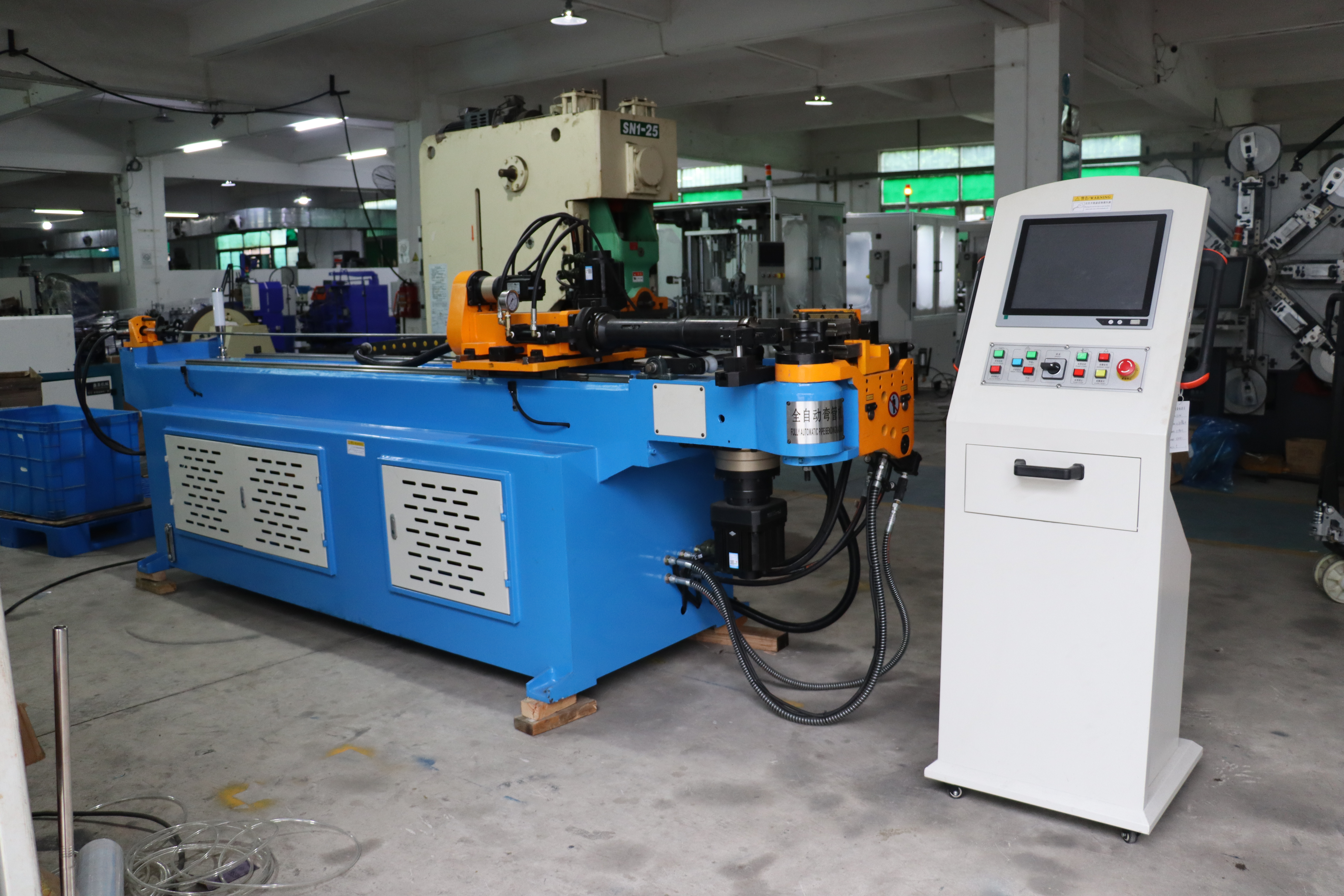
How Tube Bending Machines Enable Cold Bending: Mechanisms, Capabilities, and Material Limits
Rotary draw and roll bending: Core cold bending methods in modern tube bending machines
Today's computer controlled tube benders mostly work with two cold forming methods these days: rotary draw and roll bending. With rotary draw bending, what happens is the tube gets clamped onto a special bend die and then pulled around a fixed radius form block. This gives really good accuracy for those tight radius bends that need to go in multiple planes, which we see all over the place in car parts and airplane components. On the other hand, roll bending works differently. The tube passes through three adjustable rollers that slowly curve it into shape. This method does great for big radius curves, think of things like handrails for buildings or structural rings in construction projects. One nice thing about both approaches is they don't generate heat during the process, so the metal stays exactly how it should be without any unwanted changes. For materials like copper and aluminum that are thinner walled, rotary draw makes sense. But when working with thick wall carbon steel tubes that need smooth gradual curves, roll bending becomes the way to go. Shops will typically use mandrels, wiper dies or pressure dies to keep things from getting out of shape while bending, especially important stuff like precision hydraulic lines where even small imperfections can cause problems down the road.
Precision outcomes: Dimensional stability, surface integrity, and minimal post-processing
When using cold bending techniques, we get much more consistent shapes since there's no heat involved to cause expansion, shrinkage issues or those tricky phase changes that happen when metals get hot. Tests have shown that parts made this way stay dimensionally stable about 74 percent better than what comes out of hot forming processes. The surface stays clean too - no ugly scale buildup, oxidation problems or loss of carbon content occurs. That means any coatings applied before processing, whether it's zinc plating or powder coating, just work as intended without getting messed up. Because of all this, shops usually don't need to spend extra time on grinding, sandblasting or polishing after fabrication. The cost savings add up fast too, cutting down manufacturing expenses by somewhere between 17 and 22 percent when making large quantities. There are some limitations though. Stainless steel tubes thicker than 6mm walls tend to crack during cold bending, and even with everything set right, titanium generally needs some kind of annealing treatment in between steps. But for regular tubing sizes up to around 6mm thickness, cold bending produces parts that are practically ready to install right away, maintaining angles within half a degree accuracy and staying within a millimeter of straightness throughout.
When Hot Bending Is Necessary: Tube Bending Machine Adaptations and Thermal Trade-Offs
Induction and furnace-based hot bending: Overcoming thickness and alloy limitations
When cold bending techniques hit their limits because of material properties or wall thickness issues, hot bending simply has to happen. Most tube bending operations these days use either induction heating systems that get things up to around 800 to 2200 degrees Fahrenheit or traditional furnace setups. These methods soften just the part that needs bending, which cuts down on the force needed by somewhere between 40 and 60 percent. The result? Much tighter bends and better shape consistency across different projects. Think about those high pressure oil pipelines running through remote areas, massive steel frameworks for buildings, even specialized titanium tubes used in aircraft construction. Induction heating stands out as particularly good at this work since it focuses the heat exactly where it's needed. This means smaller heat affected areas and less risk of damaging nearby parts of the component. For engineers working on complex welded structures or precision assemblies, this controlled approach makes all the difference in keeping everything dimensionally stable and structurally sound.
Thermal side effects: Oxidation, distortion, and downstream finishing implications
When materials get softened through heat, there are always some trade-offs involved. Once temperatures climb past around 1000 degrees Fahrenheit, oxidation starts forming scale on surfaces. This means extra work after bending - either blasting away the scale with abrasives or using acid treatments. Both options eat into production time, drive up costs, and bring along those pesky environmental regulations to deal with. Temperature differences during processing lead to problems too. Walls tend to thin out unevenly, sometimes by as much as 15%, while about 20% of hot bent tubes end up oval instead of round according to industry benchmarks. Fixing these issues usually requires additional straightening, machining, or even another round of heat treatment for stress relief. All these extra steps can push back overall production schedules by anywhere from 30 to 50%. Especially important for critical parts like ASME certified pressure vessels or nuclear piping systems, where surface quality matters a lot. The way the material's structure holds up affects how long components last before failing and whether they might develop leaks over time. Because of all this, deciding if hot bending makes sense economically really depends on what exactly needs to be made and where it will be used.
Cold vs. Hot Tube Bending Machine Selection Criteria: Precision, Radius, Cost, and Application Fit
Tolerance performance, minimum bend radius, and material-specific behavior (stainless, aluminum, carbon steel)
When it comes to maintaining shape accuracy, cold bending just beats hot methods hands down. Modern computer controlled machines can hit about plus or minus 0.1 degrees for angles and stay within 0.1 millimeters when repeating positions throughout batches. The materials themselves set what's actually possible though. Take stainless steel versus aluminum for example stainless requires around eight to ten times the force needed for aluminum because it's stronger and gets harder as it bends. This makes a real difference in what shops can realistically accomplish. And speaking of limitations, the smallest radius that can be bent depends on all these factors too, which means manufacturers need to plan carefully based on their specific material choices.
- Aluminum: 1— tube diameter
- Carbon steel: 1.5— tube diameter
- Stainless steel: 2— tube diameter
Springback—ranging from 2° in annealed aluminum to 15° in hardened martensitic steels—must be precisely compensated in machine programming. Verified field data from 2023 fabrication benchmarks shows cold bending reduces post-processing steps by ~70% compared to thermal alternatives, reinforcing its dominance where material and geometry allow.
Strategic exceptions: High-thickness or low-ductility applications where hot bending delivers superior results
When dealing with walls thicker than 12mm or working with tough alloys like Ti-6Al-4V, hot bending just can't be beat. The heat makes these stubborn materials flow better during shaping, allowing bends as tight as half the tube diameter something that would crack or thin out the metal if done cold. Sure, it takes longer about 25% more time on average and requires extra work after bending, but this method opens up possibilities for really important parts. Think about turbine casings down in oil rigs, those big underwater pipe connections, or even structural pieces in power plants. For engineers facing these challenges, getting reliable bends without breaking the integrity of the material is worth putting up with the extra heat control and surface touch-up work that comes along with hot forming processes.
FAQ
What are the main cold bending methods in tube bending machines?
The main cold bending methods in tube bending machines are rotary draw bending and roll bending. Rotary draw provides high precision and is used for tight radius bends, while roll bending is ideal for large radius curves.
Why might hot bending be necessary despite cold bending techniques?
Hot bending is necessary when cold bending techniques hit their limits, often due to material properties or wall thickness issues. It allows more precise and tighter bends, particularly for large-scale projects like pipelines and structural frameworks.
What are the downsides of hot bending processes?
Hot bending processes can result in oxidation, distortion, and require additional finishing work. This leads to increased costs, production time, and environmental considerations.