 EN
EN



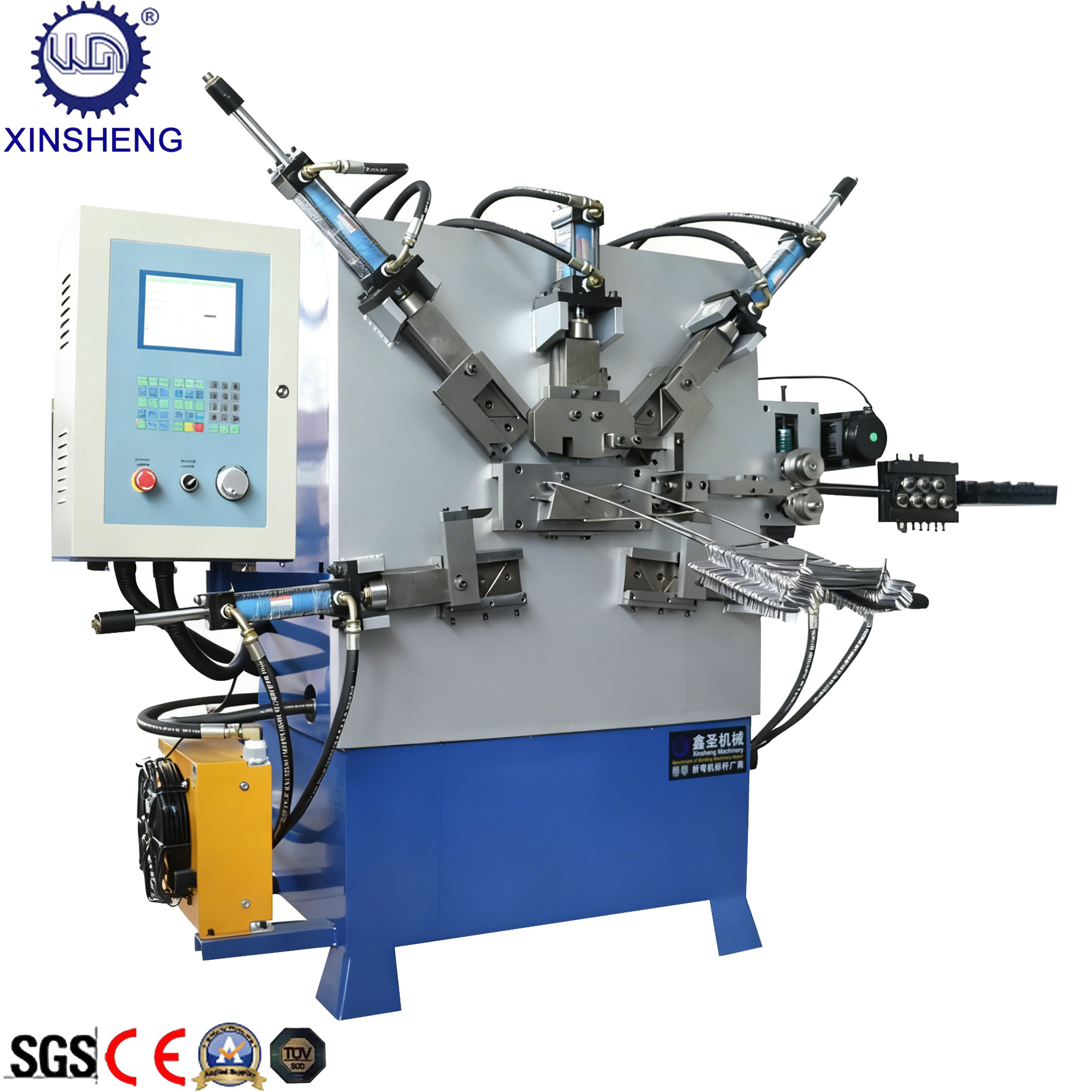
Why Hydraulic Wire Bending Machines Are Essential for Renewable Energy Infrastructure
Meeting Precision and Repeatability Demands in Solar Mounting and Wind Turbine Cabling
The infrastructure for renewable energy needs wires configured with extreme precision to maintain both structural integrity and electrical safety standards. Solar farms rely on hydraulic wire benders that can hold angles within half a degree for those panel mounting frames, which stops energy losses when panels aren't properly aligned. Wind turbine projects face similar challenges, needing consistent bends throughout all those tower sections where high voltage cables need safe housing. Manual bending just doesn't cut it anymore; modern systems hit around 99.8% repeatability according to Renewable Tech Quarterly last year, so there's no need for time-consuming fixes once everything arrives on site. This level of accuracy makes all the difference when fitting power lines into tight nacelle compartments while still complying with those tough electrical clearance rules. Plus, the controlled pressure applied by hydraulic systems keeps materials from warping, ensuring copper and aluminum wires stay conductive even after years of vibrating operation.
Ensuring Structural Integrity Under Load-Bearing and Environmental Stress
Hydraulic wire benders keep the tensile strength intact because they eliminate those pesky stress concentrations at the bend points. This matters a lot when dealing with parts exposed to 150 mph winds or seismic activity. What these machines do best is distribute pressure evenly across the material. That helps prevent tiny cracks from forming in stainless steel support cables used in solar trackers. These cables can handle as much as 12 tons of weight after all. Coastal wind farms benefit greatly too. The machines create bends that resist corrosion while keeping their protective zinc coatings intact. According to the Offshore Energy Report from last year, this actually cuts down on failures by around 40% in those harsh salt spray conditions along the coastlines. Another advantage comes from the cold forming process itself. Since there's no heat involved, we avoid creating those weak spots called heat affected zones that would otherwise reduce fatigue resistance. Most importantly, this means components last about 25 years before needing replacement. For turbine blades specifically, having reliable pitch control wiring is absolutely essential. If something fails due to metal fatigue here, it could bring entire operations grinding to a halt with potentially disastrous consequences.
Streamlining Solar Farm Construction with On-Site Hydraulic Wire Bending
Rapid Fabrication of Custom Brackets, Conduits, and Tracking System Components
Building solar farms needs specific metal parts made right there on site for things like mounting panels, managing cables, and those fancy sun tracking systems. With hydraulic wire benders around, workers can actually make all these components themselves in just a few hours instead of waiting weeks for shipments from suppliers. When the ground isn't flat or straight, field techs adjust their plans on the fly. They create brackets that stay accurate within half a degree angle or so, and run conduits exactly where they need to go through tricky landscapes. According to a study published in Renewable Energy Journal last year, this approach cuts down wasted materials between 19 and 27 percent. Plus it means getting needed parts much faster than traditional methods allow. Some common places we see this happening are...
- Mounting Hardware: Structural brackets for photovoltaic (PV) panels requiring consistent load distribution
- Cable Trays: Corrosion-resistant conduits protecting wiring from environmental exposure
- Tracking Arms: Dynamic dual-axis supports with repeatable bend radii for sun-following systems
Real-World Impact: 37% Assembly Time Reduction in a 42-MW Desert PV Plant
A 2023 deployment in Arizona's Sonoran Desert demonstrated transformative efficiency gains. By integrating hydraulic wire bending machines directly at the worksite, the project team:
- Reduced structural assembly duration from 14 to 9 weeks
- Eliminated 87% of pre-fabricated part shipments
- Cut corrective rework by 43% through immediate on-site adjustments
The machines' mobility allowed relocation across the 210-acre site as construction progressed—maintaining continuous workflow despite the remote location. These efficiencies contributed to $410,000 in labor and logistics savings while ensuring all bent components met IEC 62548 standards for desert-grade UV and thermal resilience.
Supporting Modular Wind Turbine Assembly Through Vibration-Resilient Hydraulic Bending
Precision Bending of Stainless Steel and Aluminum Conductors for Nacelle and Tower Wiring
When it comes to wind turbine assembly, hydraulic wire bending machines really stand out because they offer important vibration resistance. Wind turbines put their nacelle and tower wiring through a lot of mechanical stress since those rotors are constantly moving at over 15 Hz. What makes these machines special is their fluid driven system that keeps angular accuracy around ±0.1 degrees even when working with tough materials like stainless steel and aluminum conductors. This kind of precision helps avoid those tiny cracks that can form in power lines over time. Compared to electric options, hydraulic systems actually provide more consistent force during repeated bending tasks, which means no springback issues with hard metals. That's why we see them so often in tight nacelle spaces where everything needs to fit just right. According to field research, when conductors are properly shaped this way, there's about a 63% drop in harmonic resonance problems versus what happens with manual methods. Offshore wind farms benefit too - the aluminum conductors made resistant to corrosion still work great after being exposed to saltwater spray. Plus, these machines can handle cables ranging from 8mm all the way up to 40mm diameters, making it much easier to produce customized grounding rings and lightning protection systems throughout different parts of the tower.
Operational Advantages of Hydraulic Wire Bending Machines in Remote Renewable Sites
For those working on remote renewable projects, hydraulic wire benders offer real advantages when dealing with tough environments and limited infrastructure. These machines are built tough enough to handle whatever nature throws at them, whether it's blowing sand in deserts or corrosive salt air near coasts. They maintain pretty good accuracy too, staying within about 0.1 degree without needing constant adjustments. Compared to regular shop tools, these portable units let workers create custom conduit and structural pieces right on site. This cuts down on waiting weeks for shipped parts and saves around 34% in transport emissions according to a recent study from Renewable Logistics in 2023. The newer models have these efficient servo-hydraulic systems that actually use 40% less power than older versions, which matters a lot for sites running off limited solar panels or batteries. With automated controls and memory programming, even crews with basic training can produce consistent complex bends. This helps overcome the problem of finding skilled workers in remote areas. And let's not forget the remote monitoring features that help predict when maintenance is needed. Wind farms in mountainous regions have seen downtime drop by nearly 60% thanks to this proactive approach.
FAQs
1. Why is precision important in wire bending for renewable energy projects?
Precision in wire bending is crucial to maintain structural integrity and electrical safety, ensuring that components like solar panels and wind turbine nacelle compartments fit perfectly and function efficiently.
2. How do hydraulic wire bending machines prevent material warping?
Hydraulic wire bending machines apply controlled pressure evenly across the wire, preventing warping and maintaining the wire's conductive properties even under long-term operation.
3. What benefits do hydraulic bending machines provide in harsh environmental conditions?
These machines create corrosion-resistant bends and maintain structural integrity in extreme conditions, such as high winds or coastal environments, preventing component failure and extending the lifespan of renewable infrastructure.
4. How do hydraulic wire benders contribute to efficiency in solar farm construction?
By enabling on-site fabrication of custom components, hydraulic wire benders reduce material waste and shipping delays, cutting assembly times and saving costs.
5. What makes hydraulic wire bending machines suitable for remote renewable sites?
The portability and durability of these machines make them ideal for remote sites, enabling local fabrication and reducing transport emissions, while also offering efficient power usage and ease of operation.
Table of Contents
- Why Hydraulic Wire Bending Machines Are Essential for Renewable Energy Infrastructure
- Streamlining Solar Farm Construction with On-Site Hydraulic Wire Bending
- Supporting Modular Wind Turbine Assembly Through Vibration-Resilient Hydraulic Bending
- Operational Advantages of Hydraulic Wire Bending Machines in Remote Renewable Sites
- FAQs