 EN
EN



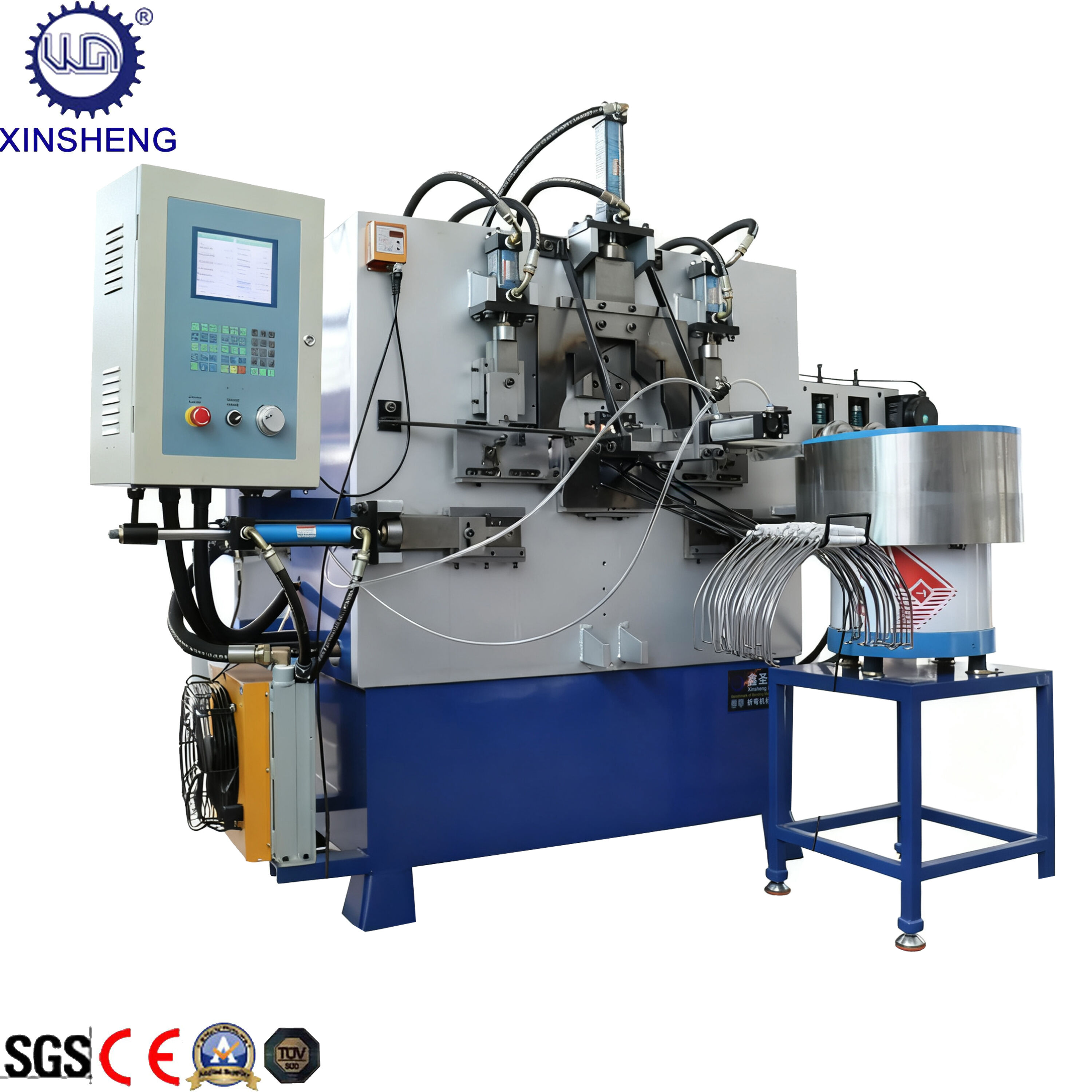
Mechanical vs. Servo-Electric Bucket Handle Making Machine Systems
Precision, Cycle Time, and Repeatability Benchmarks
The precision offered by servo electric systems is really something special these days. These machines can hit tolerances tighter than ±0.1mm thanks to their closed loop feedback system, and they knock out each handle in under three seconds flat. That kind of speed makes them perfect choice for those big volume manufacturing operations that need ISO certification too. What sets them apart even more is how reliably they perform cycle after cycle. We're talking about thousands upon thousands of repetitions without needing any sort of manual recalibration like old school mechanical presses demand. Sure, mechanical systems still have their place when companies are just getting started with prototypes or running small batches. But let's face it, those mechanical units tend to drag along at around eight seconds per cycle, plus there's usually about half a millimeter variation creeping in after long production runs. And don't forget the energy savings either. According to recent data from Metmac Industry Report 2024, servo electric units slash idle state power consumption by roughly seventy percent compared to their mechanical counterparts.
Maintenance Burden and Mean Time Between Failures (MTBF)
Getting rid of belts, flywheels, and those complicated clutch assemblies means servo electric machines have far fewer places where things can wear out mechanically. The result? Mean Time Between Failures jumps way above 25,000 hours which is actually more than three times better than what we typically see from traditional mechanical systems at around 8,000 hours. What does this really mean for operations? About 68 percent reduction in unexpected stoppages and technicians don't need to jump into action so often anymore. Maintenance gets simpler too. Lubrication isn't something that needs constant attention anymore, saving shops roughly $3,200 per year according to that Fabrication Efficiency report from last year. Meanwhile regular mechanical equipment still demands weekly checks and parts replacement like new brake pads popping up every now and then, all of which adds about 19% extra cost over time when looking at total ownership expenses.
Hydraulic Bucket Handle Making Machine Technology: When High Force Is Non-Negotiable
Force Density and Deep-Drawing Capability for Heavy-Gauge Bucket Handle Making Machine Applications
Hydraulic systems can produce as much as 3,000 tons of force thanks to something called Pascal's Principle, which makes these systems really good at shaping thick metal sheets over 5mm that are commonly found in things like industrial bucket handles. Compared to other options like mechanical presses or those fancy servo-electric models, hydraulics keep consistent pressure all the way through their movement range. This helps avoid cracks forming in tough alloys and keeps everything dimensionally stable during production. What's interesting is how they multiply force so effectively. When the pistons have different surface areas, it creates force multiplication ratios above 10:1. This means manufacturers get precise deformation results without losing track of where each part needs to be placed exactly.
Energy Efficiency Trade-Offs and Thermal Management in Continuous Operation
Compared to servo-electric alternatives, hydraulic systems typically use around 25 to 40 percent more power because they run pumps continuously and deal with fluid friction issues. When running nonstop operations, manufacturers address heat problems through several design approaches. Many top systems now feature oil cooling that keeps temperatures under 60 degrees Celsius. Some also install variable displacement pumps which cut down on wasted energy when machines aren't actively working. Insulated reservoirs help shield sensitive parts from temperature fluctuations too. Good thermal control matters a lot for maintaining proper fluid properties and keeping seals intact. This attention to temperature directly affects how often maintenance is needed and ensures these systems stay reliable over their lifespan.
CNC-Integrated Bucket Handle Making Machine Platforms: Enabling Smart Manufacturing
Real-Time Adaptive Bending with In-Line Metrology Feedback
When manufacturers integrate CNC technology into their bucket handle production lines, these machines essentially become intelligent platforms capable of adapting on the fly. During the bending process, inline metrology sensors continuously monitor the shape and dimensions of each handle, sending live feedback to the machine's control system. This allows automatic adjustments when materials vary slightly or tools start showing signs of wear. According to recent studies from the Precision Manufacturing Journal (2024), this kind of closed loop monitoring keeps dimensional accuracy within just 0.1 mm tolerance levels while slashing scrap rates by anywhere between 18 and 25 percent. Traditional manual inspection methods are no longer needed for most operations, which cuts down production time by around 30% in large scale manufacturing runs. Plus, switching between different handle designs happens much faster since there's no need for lengthy recalibrations. The result? Factories see less waste overall and get their return on investment quicker as they produce consistent batches after batch.
Total Cost of Ownership and Scalability Across Production Volumes
The real value of a bucket handle making machine isn't just about what's on the price tag when we buy it. Total cost of ownership matters much more for long term results. This covers everything from getting the machine installed properly to training workers how to operate it, plus ongoing costs like electricity bills, regular maintenance checks, those unexpected repairs, and how much raw material gets wasted along the way. Good quality machines usually produce only around 2 or 3 percent scrap material and rarely stop working unexpectedly, which means businesses start seeing good returns on investment after about five years of operation. Cheaper options might seem attractive at first glance but come with hidden costs nobody mentions upfront. These include constant breakdowns requiring extra staff time to fix problems, and significantly higher material waste rates between 8 and 10 percent that cuts into profit margins over time. The ability to scale operations is another important factor. Machines built with modular components allow manufacturers to smoothly move from small test runs to full scale production without wasting resources when orders drop off, yet still benefit from bulk purchasing advantages when business grows again.
FAQ
What is the main difference between mechanical and servo-electric bucket handle making machines?
S-servo electric systems provide tighter precision and faster cycle times compared to mechanical systems, which are more suitable for prototyping or small batch production.
How does the maintenance of servo-electric machines compare to mechanical systems?
Servo-electric machines have fewer mechanical parts, resulting in less frequent maintenance and higher Mean Time Between Failures (MTBF) compared to traditional mechanical systems.
Why are hydraulic machines ideal for heavy-gauge applications?
Hydraulic machines can generate high force (up to 3,000 tons), suitable for shaping thick metal sheets and maintaining consistency in pressure during operation.
What are the energy efficiency trade-offs of hydraulic systems?
Hydraulic systems typically consume more energy than servo-electric ones due to continuous pump operation and fluid friction, but they employ thermal management strategies to mitigate these drawbacks.
How do CNC-integrated machines enhance production efficiency?
CNC technology, with real-time metrology feedback, allows for adaptive processing, reducing waste, and improving dimensional accuracy while cutting down on production time.
Table of Contents
- Mechanical vs. Servo-Electric Bucket Handle Making Machine Systems
- Hydraulic Bucket Handle Making Machine Technology: When High Force Is Non-Negotiable
- CNC-Integrated Bucket Handle Making Machine Platforms: Enabling Smart Manufacturing
- Total Cost of Ownership and Scalability Across Production Volumes
-
FAQ
- What is the main difference between mechanical and servo-electric bucket handle making machines?
- How does the maintenance of servo-electric machines compare to mechanical systems?
- Why are hydraulic machines ideal for heavy-gauge applications?
- What are the energy efficiency trade-offs of hydraulic systems?
- How do CNC-integrated machines enhance production efficiency?