 EN



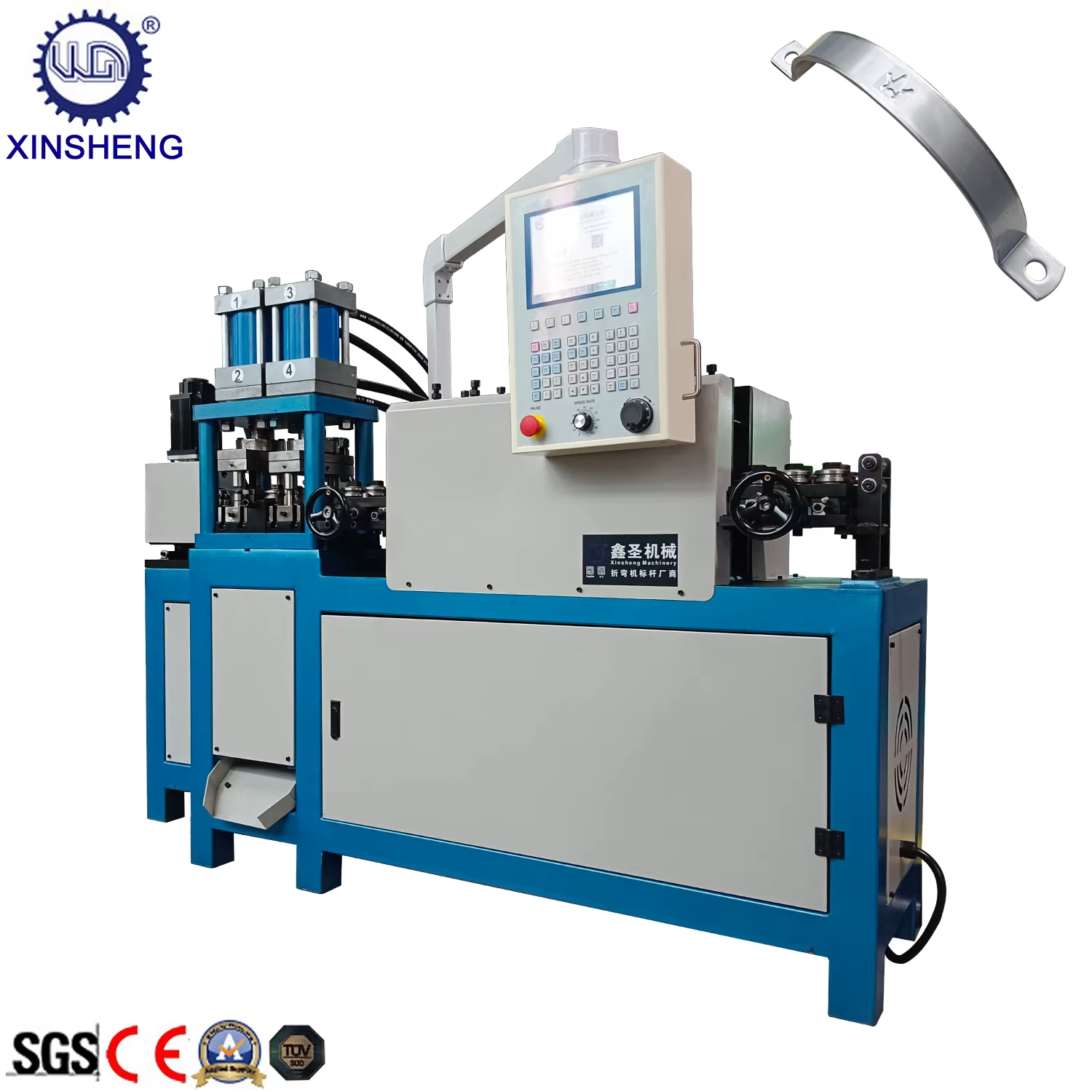
Why Ring Making Machine Runs Result in Uneven Joints and How to Fix Them
When you are running automated industrial machinery for high-volume metal fabrication, precision is everything. For plant managers, wire-forming technicians, and manufacturing engineers relying on a ring making machine, running into uneven, gapped, or misaligned joints can be a massive headache. A metal ring whose joint refuses to close cleanly ruins structural strength, messes up downstream automated welding, and generates a frustrating amount of scrap material. Drawing from years of hands-on workshop troubleshooting and mechanical reviews, let us dive into the underlying mechanical variables, material quirks, and daily operational habits that cause uneven joints in ring production, along with practical engineering fixes to keep your wire-forming lines running smoothly.
The Sneaky Role of Material Springback and Elastic Memory
Let us start with the physics of the metal itself, because material springback is often the primary culprit behind mismatched ring joints. Every single coil of wire or metal strip—whether you are working with carbon steel, stainless steel, or aluminum—has its own elastic limits and metallurgical memory. When your ring making machine bends that wire past its yield point, a certain amount of residual elastic energy stays trapped inside the crystal lattice. The moment the bending rollers let go, the wire naturally tries to spring back slightly toward its original straight shape. If your feed rate, roller pressure, or tooling setup fails to account for slight batch-to-batch hardness variations in the alloy, those cut ends are going to miss each other. Nailing springback compensation is basically a rite of passage for master machinery operators.
Feeding Tensions and the Importance of Clean Pre-Straightening
Beyond the metal's memory, what happens in the feeding and straightening units plays a massive role in whether your joints line up or not. If the wire experiences tiny micro-slips, uneven spool tension, or slight torsional twists as it enters the forming dies, the final circumference gets thrown off entirely, leaving your two ends sitting in different planes. Industry guidelines for high-tolerance manufacturing consistently emphasize that rock-solid wire pre-straightening is non-negotiable. Even a tiny fraction of a millimeter deviation during the initial wire-feeding phase gets multiplied exponentially once the material gets curved into a full loop, resulting in overlapping edges or awkward gaps at the meeting point.
Tooling Wear, Die Alignment, and Shear Blade Maintenance
Another classic headache pops up inside the cutting and forming assembly as things start to wear down over thousands of production cycles. The forming dies, arbors, and shear blades take a beating day in and day out. If your cutting blade gets even slightly dull, improperly spaced, or knocked out of alignment, it stops making a clean, square cut and instead deforms the cross-sectional tip of the wire. When those distorted ends get curved around to meet, that squashed or angled profile makes a flush fit completely impossible. Staying on top of routine preventative maintenance, using micrometers to dial in your cutting mechanism, and swapping out worn tooling before it fails are absolute musts for keeping joint geometry sharp.
Real-World Lessons from the Factory Floor
To see how these principles play out in the real world, think about a mid-sized hardware manufacturing shop that was dealing with a frustrating batch of defective rings due to skewed joints. When the technical team went in to audit the line, they realized that a combination of inconsistent wire spool tension and a slightly worn shear blade was throwing off the sync between the wire feed and the cutoff stroke. By implementing a strict tooling replacement schedule, upgrading to precision-calibrated guide rollers, and fine-tuning the machine programmable logic controller for dynamic springback compensation, the shop completely wiped out joint misalignment and boosted their daily output significantly.
Achieving Long-Term Reliability and Precision with Xinsheng
Getting past everyday production hiccups like uneven joints takes more than just trial and error—it requires smart machine design, robust build quality, and a manufacturing partner who actually understands wire-forming inside and out. Xinsheng has built a rock-solid global reputation in wire-bending and ring-forming technology, supplying state-of-the-art ring making machines engineered for ultimate precision, rugged durability, and effortless daily operation. Whether you are scaling up heavy industrial output or looking for custom machinery solutions tailored to specialized wire-forming projects, Xinsheng delivers the advanced engineering and reliable supply chain support your business needs. Partnering with Xinsheng helps you cut defect rates, maximize workshop efficiency, and future-proof your production ecosystem for years to come.
Table of Contents
- Why Ring Making Machine Runs Result in Uneven Joints and How to Fix Them
- The Sneaky Role of Material Springback and Elastic Memory
- Feeding Tensions and the Importance of Clean Pre-Straightening
- Tooling Wear, Die Alignment, and Shear Blade Maintenance
- Real-World Lessons from the Factory Floor
- Achieving Long-Term Reliability and Precision with Xinsheng