 EN
EN



The Hidden Metal Forming Bottleneck That Disrupts Production Schedules
Anyone managing a busy metal workshop has seen this happen. Advanced laser cutters, stamping presses, and high-speed machining centers run through material all day without a single hitch, filling up the staging areas with parts. But as soon as those thin-walled tubes arrive at the bending station, the smooth flow of production grind to a halt. The bending corner quickly turns into an annoying bottleneck. Racks of stainless steel, copper, or aluminum tubes sit waiting because making smooth, precise curves without collapsing the metal requires extreme care and patience. When shop operators try to push manual or basic hydraulic machinery past their limits, problems pop up immediately. Tubes warp, bend angles slip, and bad scrap piles up fast. In global supply chains, clients have zero patience for bent parts that show wrinkles or inconsistent shapes. When tolerances are tight, treating tube bending as a low-tech step and relying on guesswork is a quick way to lose money.
Why Basic Push Bending Techniques Fail on Modern Production Lines
Simple ram and press benders have worked well in basic shops for years, but today's high-mix commercial contracts show their limitations very quickly. Finding operators who have the steady hand and experience to make perfect bends all day is getting harder. Even the most skilled worker gets tired as a long shift goes on. The parts finished first thing in the morning rarely look identical to the ones completed right before the shift ends. Small changes in clamp pressure, tiny mistakes in measuring springback, or temperature shifts in the shop can turn a whole batch of expensive steel tubing into scrap. Beyond human error, basic bending setups demand too much slow, manual handling. If a part needs multiple bends on different planes, the operator must unclamp the piece, rotate it, and set up the fixture again. Every time the metal is re-clamped, small positioning errors add up, dragging down efficiency and causing delivery delays.
How CNC Rotary Draw Mechanics Ensure Perfect Fluid Pathways
This is where a modern rotary draw tube bending machine completely changes the production game on the shop floor. Instead of pressing a heavy die directly into a free-hanging pipe, rotary draw systems clamp the material firmly between a bending die and a pressure die. As the machine rotates, the tube is drawn along the die's groove. To keep the tube from collapsing or wrinkling, an internal support mandrel is placed inside the pipe right at the point where it bends, while a wiper die smooths out the metal on the inside radius. Supporting the metal from both the inside and outside keeps the tube perfectly round and prevents the outer wall from stretching too thin. This level of precise control is absolutely necessary for making leak-free plumbing manifolds, fuel lines, and high-pressure automotive hydraulic systems that must endure continuous pressure without cracking.
Smart Engineering Solutions to Overcome Metal Springback
Working with tough metals requires machinery that can actively adapt to physical forces. When you bend any metal tube, the outer curve stretches and gets thinner, while the inner curve compresses and thickens. Once the machine releases the part, the metal naturally tries to spring back slightly to its original shape. If your machinery cannot handle this, your finished angles will be off. CNC bending systems solve this problem by using automatic sensors to measure and correct for springback on the fly. For extra-tight bends, advanced machines use a rear boost system. This hydraulic mechanism pushes the tube forward from the back during the bend, feeding more metal into the bending zone. This extra push relieves stress on the outer wall, prevents thinning, and makes sure high-strength automotive frames or heavy-duty plumbing joints remain solid and reliable.
Real-World Business Value Beyond Just Faster Cycle Times
Looking at machine investments only by counting how many seconds it takes to bend a single part misses the bigger financial benefits across the factory. The real cost savings of an automated tube bending machine show up throughout your entire assembly line. When bent tubes leave the machine with perfect, repeatable shapes, workers no longer have to spend hours filing, hammering, or manually adjusting parts to make them fit. Assembly teams can put things together quickly and smoothly because every component matches the blueprint perfectly on the first try. This consistency also lets you change your shop floor setup. Instead of having one worker tied to a single machine, one operator can easily manage an automated cell, checking finished parts while the machine runs. This reduces waste, keeps inventory moving faster, and helps you meet shipping promises without unexpected delays.
Quality Standards and Production Reliability with Xinsheng
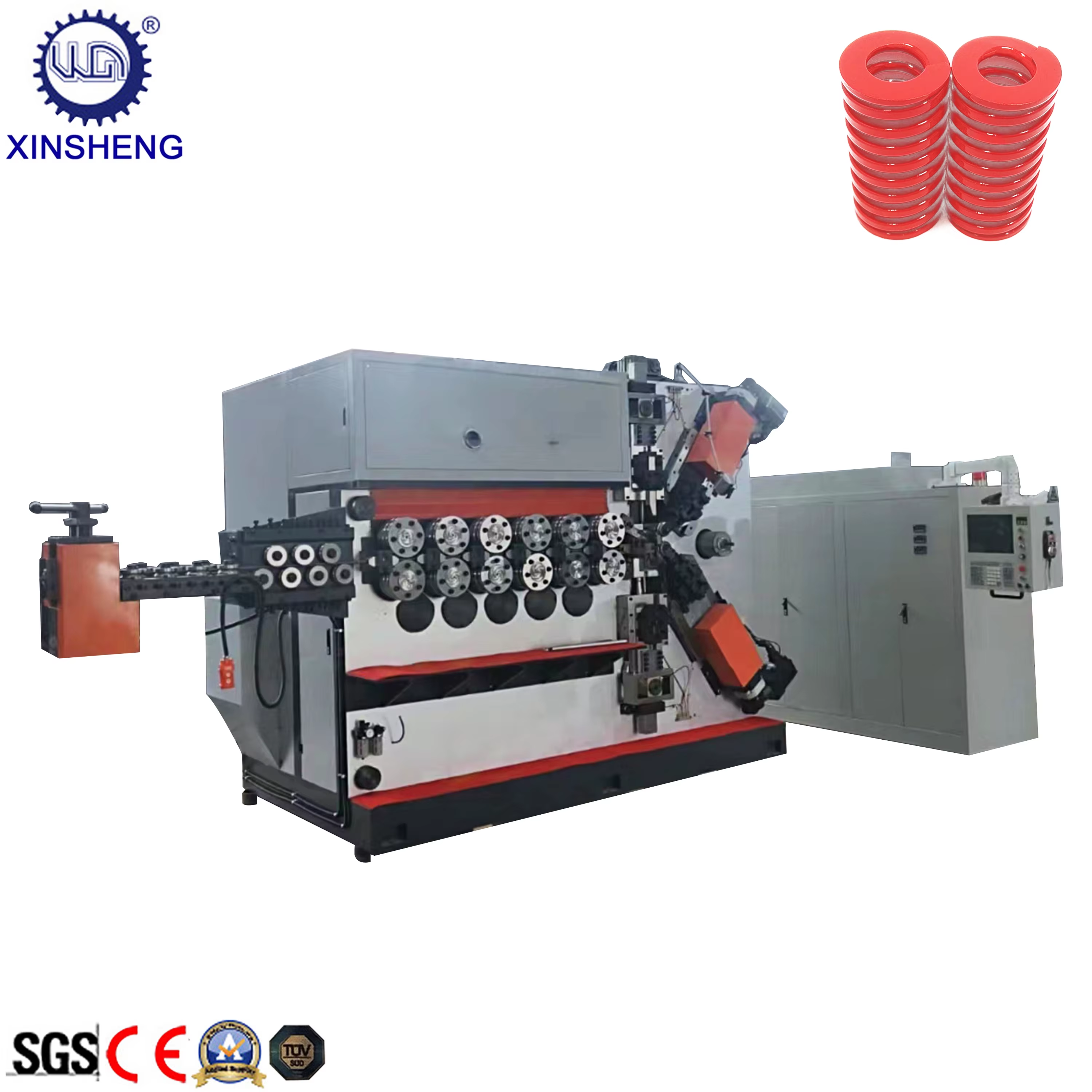
High-precision tube forming does not exist on its own; it serves as the mechanical foundation for building durable, heavy-duty industrial machinery. At Xinsheng, high manufacturing standards define the working life and reliability of automated forming equipment. Building international-grade wire bending and spring coiling systems requires high-strength feed rollers, durable forming mandrels, and stable tool assemblies that can handle continuous, multi-shift production without losing alignment. Drawing on extensive equipment design experience and holding respected quality certifications, Xinsheng builds precision and toughness into every single machine. With an established global supply chain and responsive technical support across many countries, Xinsheng helps manufacturers run high-speed hardware lines with minimal tooling wear and virtually no downtime. Choosing proven, reliable machinery gives businesses the precision they need to keep their lines running and stay competitive.
Table of Contents
- The Hidden Metal Forming Bottleneck That Disrupts Production Schedules
- Why Basic Push Bending Techniques Fail on Modern Production Lines
- How CNC Rotary Draw Mechanics Ensure Perfect Fluid Pathways
- Smart Engineering Solutions to Overcome Metal Springback
- Real-World Business Value Beyond Just Faster Cycle Times
- Quality Standards and Production Reliability with Xinsheng