 EN
EN



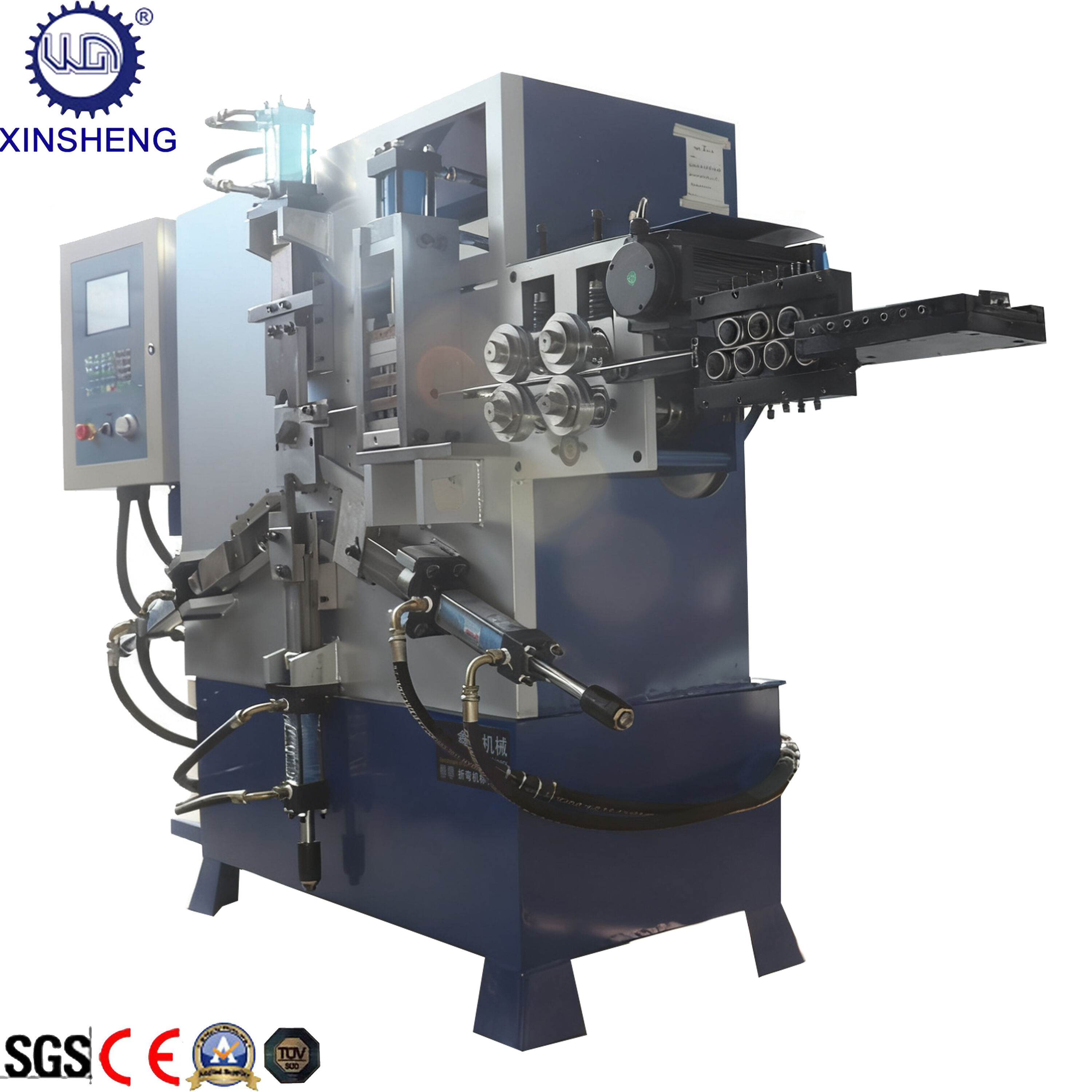
Understanding Strip Feeding Fundamentals in Strip Forming Machines
Why Feed Precision Dictates Part Quality and Tool Life
Getting the strip feeding just right makes all the difference when it comes to how accurately parts get stamped and how long those progressive dies actually last. When there's even a tiny deviation in feeding, say around 0.1mm, these small issues build up as parts move through different forming stations. What happens? Misalignment sets in, which puts extra stress on tools and creates more scrap material. According to recent research from the Journal of Manufacturing Processes back in 2023, inconsistent feeding can speed up die wear by about 30%. And things get worse with tougher materials such as 0.8mm thick stainless steel where springback problems really start messing with tolerances. Keeping that feed super consistent at the micron level helps prevent edges from getting deformed during blanking operations and cuts down on those annoying burrs too. The result? Tools stay in good shape much longer, sometimes extending their useful life by as much as 40% when running high volume production lines.
Core Components: Decoiler, Leveler, NC Servo Feeder, and Progressive Die Integration
Four synchronized systems enable precision strip feeding:
- Decoiler: Unwinds coils while maintaining consistent tension
- Leveler: Eliminates coil set and crossbow through multi-roller correction
- NC Servo Feeder: Advances material via programmable motion profiles
- Progressive Die: Performs sequential operations with pilot-guided positioning
Getting everything working together properly matters a lot in this setup. The leveler needs to maintain flatness around 0.5mm per meter if we want to avoid problems with the servo feeder slipping during operation. At the same time, those pilot pins on the die do their job by lining up the metal strips as they move from one station to another. These days most advanced systems tie all these parts together using closed loop control mechanisms. What makes them work so well? Take a look at the servo feeders themselves - their resolution goes down below 0.01mm which means the strips get positioned just right before every single press stroke happens. When all these elements function smoothly together, it cuts down on wasted time between operations. And let's not forget the impressive speeds manufacturers can reach when everything clicks into place correctly. We're talking about over 120 strokes per minute in many automotive manufacturing settings, something that would have seemed impossible just a few years ago.
Motion Profile Optimization for Material-Specific Strip Feeding
Trapezoid vs. S-Curve Profiles: Balancing Speed, Acceleration, and Edge Integrity
The choice of motion profile makes all the difference when it comes to keeping parts consistent and extending tool life. Trapezoid profiles work great for thicker stuff like 1.5mm carbon steel because they accelerate quickly and maintain steady speed during operation. Edge deformation isn't really an issue with these materials. But watch out for those sharp direction changes in trapezoids. They create vibrations that mess with dimensional accuracy especially bad on thin foils. That's where S-curve profiles shine. These profiles ramp up acceleration gradually instead of just jumping right in. According to ASME research from last year, this approach cuts peak mechanical stress down by about 40%. The smoother start and stop helps preserve edges on delicate materials such as copper alloys even though production cycles take longer, roughly 15 to 25% extra time. When working with fast stamping operations on 0.5mm aluminum sheets, S-curves actually stop tiny fractures from forming while still maintaining impressive output rates over 80 parts per minute.
| Profile Type | Best For Material Thickness | Edge Defect Reduction | Speed Impact |
|---|---|---|---|
| Trapezoid | >1.2 mm | Minimal | +20% faster |
| S-Curve | <1.0 mm | Up to 60% | -15% slower |
Mitigating Springback and Inertia Errors in Thin-Gauge Strip (e.g., 0.8mm SS)
Thin stainless steel strips under 1.0mm exhibit significant springback due to elastic recovery after forming—a primary cause of dimensional drift in high-precision components. Inertia errors compound this when rapid deceleration stretches material beyond yield points. To counteract these effects:
- Implement acceleration-limited S-curves with maximum jerk thresholds below 50 m/s³
- Calibrate feeder dwell times to allow stress relaxation between cycles
- Use strain gauges at die entry to trigger real-time profile adjustments
For 0.8mm SS applications, reducing peak acceleration from 0.8G to 0.5G slashes springback variance by 32% while maintaining feed rates above 45 m/min. Closed-loop tension control further synchronizes material flow, eliminating timing drift that exacerbates inertia-related thinning.
Closed-Loop Control and System Integration for Consistent Strip Feeding
Tension Matching Across the Line: Eliminating Timing Drift with <2 PSI Variance
Keeping consistent tension across the entire strip forming machine line stops those annoying timing issues from happening. When pressure variations go above 2 PSI, materials start slipping or buckling, which causes parts to get misaligned and eventually damages dies over time. Most modern operations use closed loop systems with pressure sensors installed right at key points like the decoiler, through the leveler section, and down at the feeder unit. The data from these sensors goes straight to a main control box that constantly tweaks brake settings and adjusts servo motor speeds so tension stays within that tight ±1.5 PSI range. Getting this kind of control makes a big difference on the shop floor. Factories report cutting down scrap waste anywhere between 25 to 30 percent when running high volume jobs, plus tools last much longer since they aren't getting damaged from those random misfeeds anymore.
Real-Time Sensor Feedback from Leveler Exit to NC Servo Feeder Commands
The sensors located at the leveler exit keep track of several important factors including strip tension, where things are positioned, and how the surface looks overall. What happens next is pretty impressive too - all this information gets sent straight to the NC servo feeder almost instantly, letting it make quick changes to how it moves around. For instance, if there's any change in material thickness, the system can adjust acceleration on the fly. These kinds of real time fixes help stop problems from happening further down the line in the progressive die setup. The whole system works so well that operators don't need to step in as much anymore, cutting down manual work by about 40 percent according to measurements taken recently. Feed accuracy stays really tight too, holding within plus or minus 0.05 mm even when running over 100 strokes per minute. This kind of precision makes sure parts come out consistently good quality during those complex strip forming processes.
Selecting and Applying the Right Feeder Type for Your Strip Forming Machine
Gripper vs. Roller Feeder: Decision Criteria Based on Thickness, Speed, and Surface Sensitivity
When deciding between gripper and roller feeders, there are three main considerations worth keeping in mind material thickness, how fast production needs to run, and whether the material surface matters. Gripper systems work best for super thin materials under 0.5mm when running at speeds over 120 parts per minute. They can achieve really tight tolerances around plus or minus 0.1mm. But watch out those grippers can scratch or mar shiny surfaces or coatings on metal. Roller feeders take a different approach. They're gentler on thicker materials above 1.2mm and won't leave marks thanks to their special non-marking rollers. The downside? Most roller systems top out around 100 SPM. Stainless steel and other springy alloys need extra care too. With proper tension settings on roller feeders, deformation gets minimized during the feeding process. Before committing to either system, it's smart to test compatibility with existing progressive dies since mismatched setups often lead to costly alignment issues down the line.
| Feature | Gripper Feeder | Roller Feeder |
|---|---|---|
| Material Thickness | Optimal for <0.5mm thin gauge | Ideal for >1.2mm thick stock |
| Speed Capability | High-speed (120+ SPM) | Moderate-speed (<100 SPM) |
| Surface Sensitivity | Risk of marking delicate surfaces | Non-marking for sensitive finishes |
| Precision | ±0.1mm with closed-loop control | ±0.2mm (requires tension sensors) |
FAQs on Strip Feeding Fundamentals in Strip Forming Machines
1. What is strip feeding in strip forming machines?
Strip feeding refers to the process of advancing and positioning material strips precisely in strip forming machines for operations like stamping and cutting.
2. Why is precision important in strip feeding?
Precision in strip feeding is crucial for achieving accurate stamping, reducing die wear, minimizing burrs, and maintaining optimal tool life.
3. What are the core components involved in strip feeding?
The core components include the decoiler, leveler, NC servo feeder, and progressive die, all working together for synchronized strip feeding.
4. How do trapezoid and S-curve profiles affect strip feeding?
Trapezoid profiles are suitable for thicker materials and offer faster speeds, while S-curve profiles reduce edge defects and stress for delicate materials.
5. What challenges are faced with thin-gauge strips?
Thin-gauge strips experience springback and inertia errors, which can be mitigated using acceleration-limited profiles and strain gauges.
Table of Contents
- Understanding Strip Feeding Fundamentals in Strip Forming Machines
- Motion Profile Optimization for Material-Specific Strip Feeding
- Closed-Loop Control and System Integration for Consistent Strip Feeding
- Selecting and Applying the Right Feeder Type for Your Strip Forming Machine
- FAQs on Strip Feeding Fundamentals in Strip Forming Machines